
Behind the Menu
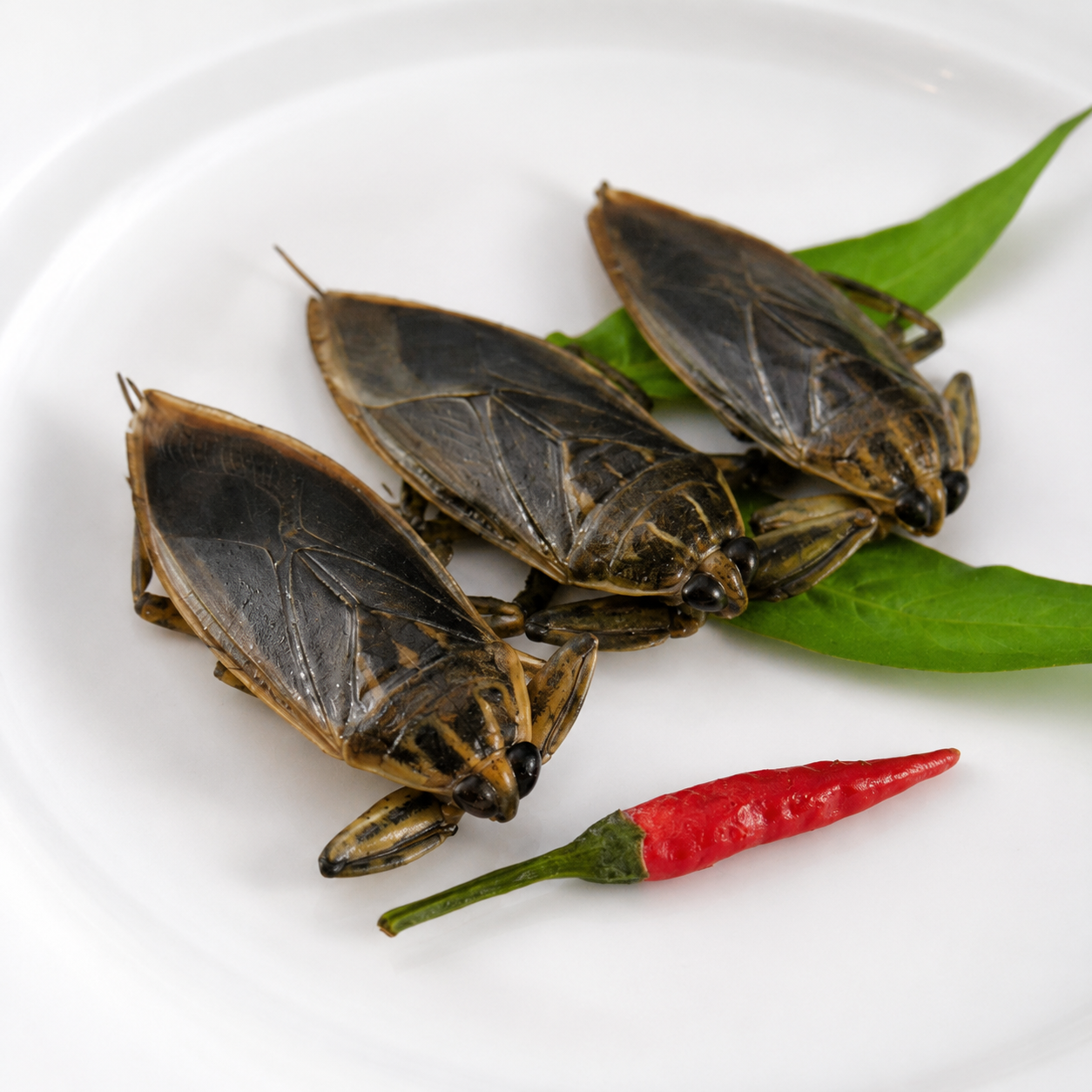
Thai Mang Da (Giant Water Beetle)
One of Thailand's most unusual delicacies, prized not for shock value, but for an extraordinary natural aroma unlike anything else in the culinary world.
Mention giant water beetles and most people imagine a dare. In Thailand, they're simply another ingredient, and a highly prized one at that.
Known as Mang Da, these large aquatic insects are celebrated for an intense floral aroma that's difficult to compare to anything else. Many people describe hints of green apple, pear, pandan, cinnamon, or tropical flowers. Whatever comparison you choose, the important thing is this: it doesn't taste the way most people expect an insect to taste.
Why Are They So Special?
The remarkable aroma comes from the male giant water beetle, which naturally produces highly fragrant compounds used to attract mates. Thai cooks discovered centuries ago that these same aromatic compounds could transform a dish with just a small amount, creating a flavor that's both bold and surprisingly elegant.
Rather than being served simply as a novelty, Mang Da has long been valued as a premium culinary ingredient throughout Thailand.
Ingredient Spotlight
Authentic Mang Da is increasingly rare. Because the natural aroma is so distinctive, many commercial products sold throughout Southeast Asia rely on synthetic flavoring instead of real beetles. It's much like the difference between imitation vanilla and a real vanilla bean. The basic flavor is there, but the complexity isn't.
How It's Traditionally Used
In Thailand, Mang Da is often pounded into Nam Phrik Mang Da, a fragrant chili dip served with fresh vegetables and sticky rice. In Vietnam, where it's known as cà cuống, just a drop of its aromatic extract has traditionally been used to perfume noodle soups and rice dishes.
It's used much the same way chefs use saffron, truffles, or vanilla: not because it's unusual, but because nothing else tastes quite like it.
A Southeast Asian Delicacy
For generations, Mang Da has been appreciated throughout Southeast Asia by people seeking exceptional flavor rather than culinary adventure. It challenges assumptions about what an ingredient should be, reminding us that some of the world's most remarkable flavors come from places we'd never expect.