
Behind the Menu
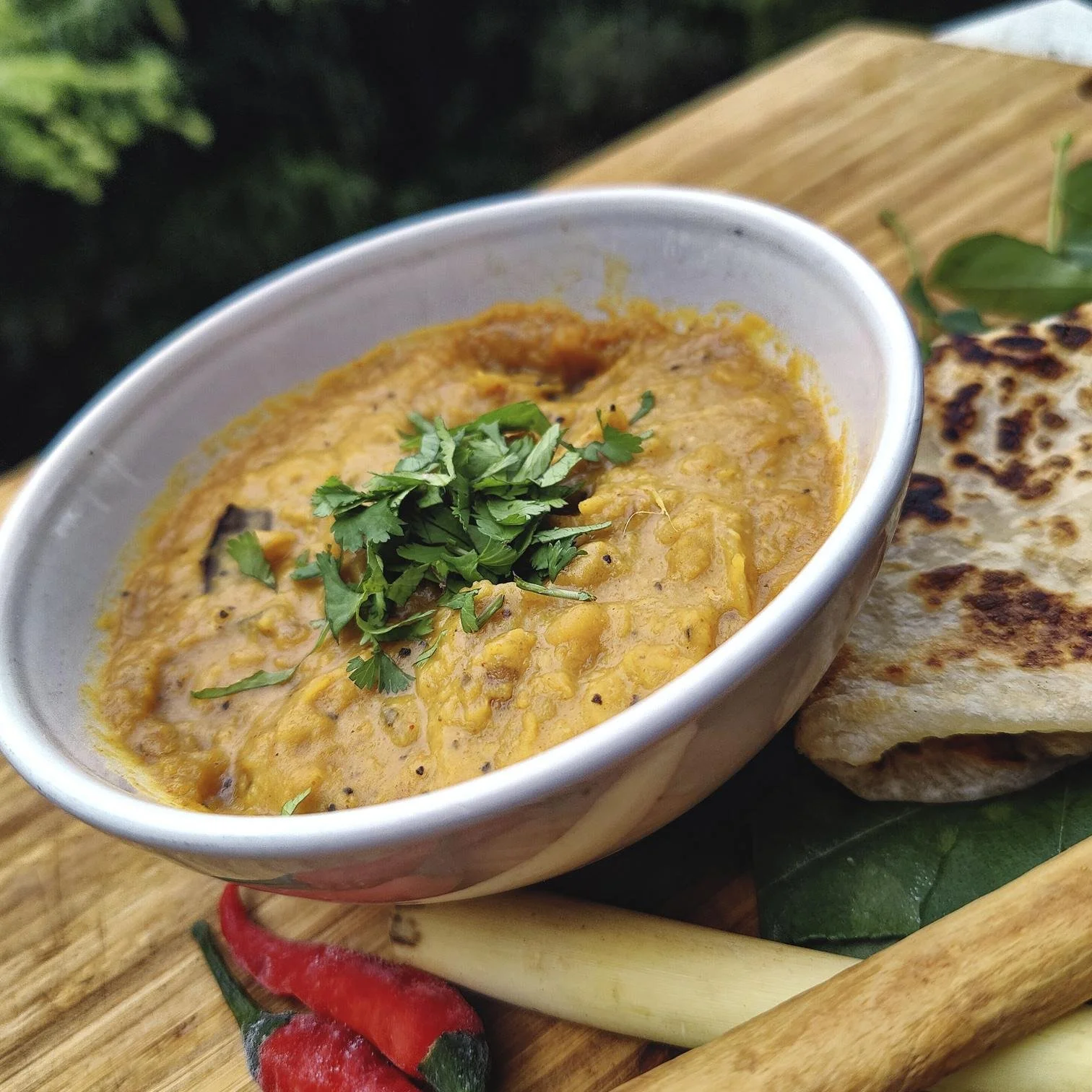
Malaysian Dhal
A creamy coconut lentil stew where Indian traditions meet the bright flavors of Southeast Asia.
If you've only had Indian dhal, Malaysian dhal might surprise you.
For centuries, the Strait of Malacca was one of the busiest trade routes in the world, connecting merchants from India, China, the Middle East, and Southeast Asia. Along with silk and spices came recipes, and over time those traditions blended into a cuisine that's unmistakably Malaysian.
A Bowl Shaped by Trade
Indian cooks brought lentil-based dhal to the Malay Peninsula, but local ingredients transformed it. Rich coconut milk replaced the lighter broths common in many Indian versions, while fragrant herbs like lemongrass and makrut lime leaves gave the dish a distinctly Southeast Asian character.
The result is something familiar yet completely its own.
Ingredient Spotlight
One ingredient changes everything: makrut lime leaves. Unlike ordinary limes, the leaves contribute intensely aromatic citrus oils without the sharp acidity of the fruit itself. Combined with lemongrass, ginger, and curry leaves, they create a bright fragrance that's unmistakably Southeast Asian.
Comfort Food with a Twist
Our dhal is slow-simmered until the lentils become creamy, then enriched with coconut milk for a velvety texture. It's deeply satisfying without feeling heavy, especially when scooped up with warm roti or served over rice.
The dish is naturally vegan, and with rice instead of roti it's also gluten free.
Why it's on our menu
Malaysia's food culture is one of the world's great examples of culinary exchange, where centuries of travel, migration, and trade created something entirely new. This bowl captures that spirit perfectly. It's humble, comforting, and proof that some of the world's best recipes are born where cultures meet.