
Behind the Menu
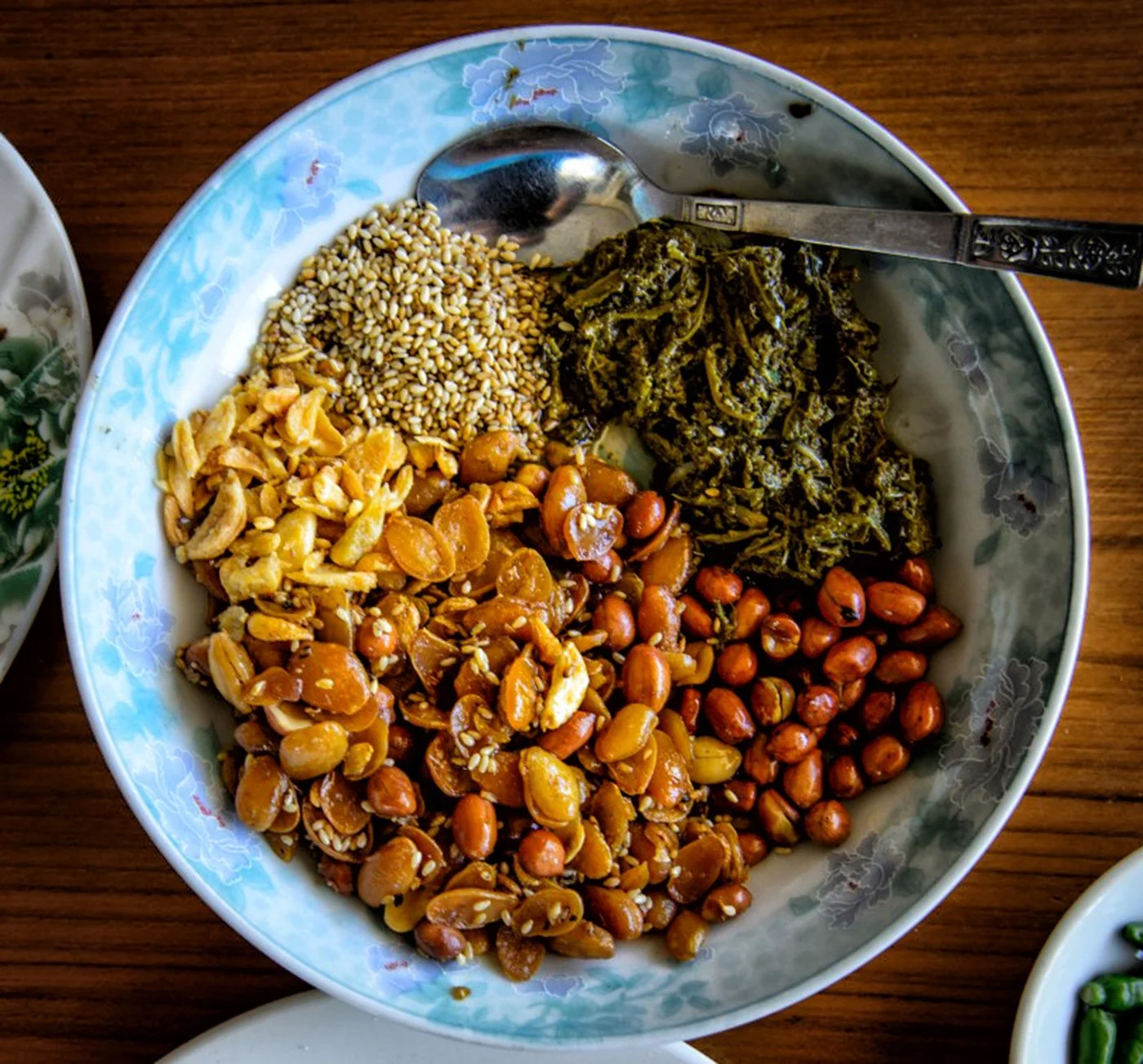
Burmese Laphet Thoke (Tea Leaf Salad)
Myanmar's national salad, built around one ingredient almost nowhere else in the world eats: fermented tea leaves.
Laphet Thoke is one of Myanmar's most celebrated dishes and unlike almost any salad you'll find elsewhere. Instead of using tea only as a drink, Burmese cooks ferment young tea leaves for months until they become soft, savory, and pleasantly tangy.
The result is a salad that combines crisp vegetables, crunchy nuts and seeds, fresh herbs, fried garlic, and fermented tea leaves into a dish that's bright, earthy, and packed with texture. It's a meal that surprises almost everyone who tries it for the first time.
Tea You Eat, Not Drink
Myanmar is one of the few places in the world with a long tradition of eating tea. The leaves are harvested, steamed, fermented, and seasoned before being mixed into salads or served during ceremonies and celebrations. Offering fermented tea has long been a symbol of hospitality and reconciliation, with the dish often appearing at important gatherings.
Today, Laphet Thoke is considered Myanmar's national dish and can be found everywhere from roadside vendors to family dinner tables.
Our Version
We combine authentic Burmese fermented tea leaves with crisp cabbage, tomatoes, fresh herbs, crunchy fried garlic, roasted peanuts, sunflower seeds, sesame seeds, and fresh lime. Every bite balances acidity, crunch, umami, and a subtle bitterness that makes the salad unlike anything else on our menu.
Ingredient Spotlight
The defining ingredient is fermented tea leaves. Unlike brewed tea, the leaves themselves are carefully fermented until their bitterness softens into a savory, slightly tangy flavor rich in natural umami. It's one of the world's most distinctive culinary ingredients and remains largely unique to Myanmar.
Why it's on our menu
One of Nue's goals has always been introducing guests to dishes they may have never encountered before. Laphet Thoke perfectly captures that spirit. It's rooted in centuries of Burmese tradition while challenging expectations about what a salad, or even tea, can be.