
Behind the Menu
Dutch Patat Oorlog (War Fries)
The Netherlands' gloriously messy answer to loaded fries, where Dutch snack bar culture meets Indonesian flavor.
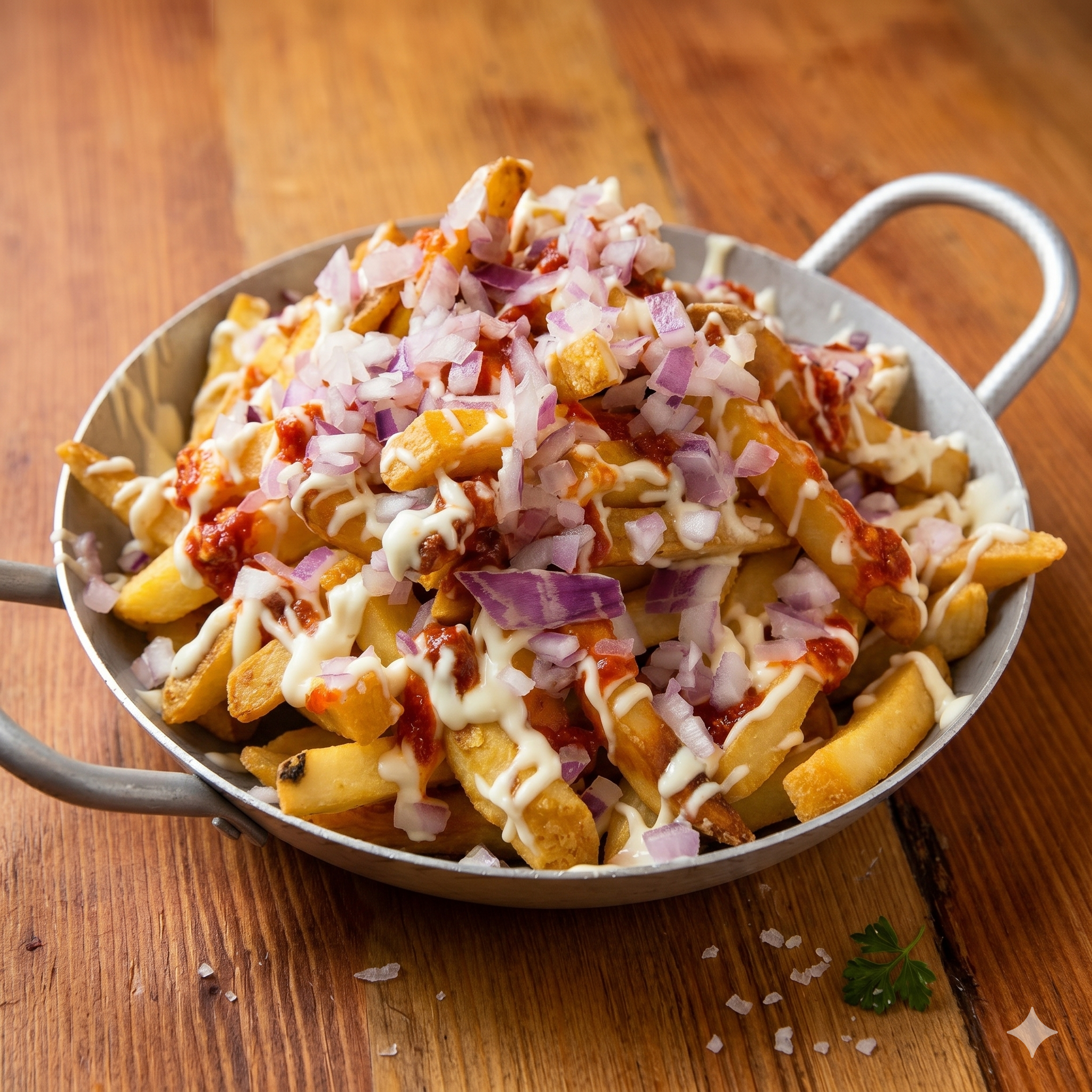
At first glance, Patat Oorlog looks like complete chaos. Thick-cut fries disappear beneath ribbons of mayonnaise, warm peanut satay sauce, spicy sambal, and finely diced onions. Somehow, all that disorder comes together into one of the Netherlands' most beloved street foods.
You'll find it everywhere from neighborhood snack bars to busy city centers, usually served in a paper tray and eaten with a tiny plastic fork while standing on the sidewalk.
Why Are They Called "War Fries"?
The Dutch word oorlog means "war." Despite the dramatic name, the dish isn't connected to any historical battle. Instead, it refers to the appearance. The fries are buried beneath sauces and toppings that collide in a colorful, seemingly random mess, creating what looks like a tiny battlefield in a paper tray.
It may look chaotic, but every topping has a purpose.
Ingredient Spotlight
The peanut satay sauce tells the deeper story. Indonesia was part of the Dutch East Indies for more than three centuries, and Indonesian cooking profoundly influenced Dutch food culture. Today, satay sauce has become a staple throughout the Netherlands, appearing on everything from grilled meats to fries.
Why It Works
Patat Oorlog succeeds because every topping balances another. The mayonnaise cools the heat of the sambal. The peanut sauce adds richness and sweetness. Raw onions contribute a fresh crunch, while the crisp fries provide the foundation that ties everything together.
Every bite is slightly different, which is exactly what keeps it interesting.
A Dutch Street Food Classic
Patat Oorlog has become one of the defining dishes of Dutch snackbar culture. It's inexpensive, filling, unapologetically messy, and a perfect example of how history, immigration, and everyday life can combine to create an entirely new national favorite.